The ARVA Axis was released in 2011 and discontinued in 2013.
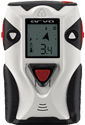
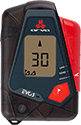
Summary: The now-discontinued ARVA Axis was the fewer-featured little brother to the ARVA Pro W (aka Link). This followed the trend of the Pieps Tour (the fewer-featured little brother to the Pieps DSP ) and the Mammut Element (the little brother to the Mammut Pulse). I own, but have not fully tested, the Axis.
(Don't confuse the ARVA Axis which was released in 2011 and discontinued in 2013 with the ARVA 3Axes which was discontinued in 2011.)
The easiest way to describe the Axis it so say that it is identical to the ARVA Pro W with these exceptions:
Using the big-brother little-brother analogy, it's notable that ARVA chose to keep many more features in their little brother (i.e., the Axis) than Mammut and Pieps chose to keep in the Element and Tour. For example:
Many of the features that were retained in the Axis, such as the customizable startup screen, the lighted display, and the earphone jack, add benefit without adding any complexity. Even the ability to toggle to analog (by pressing and holding both buttons) adds significant power yet can be completely ignored. The one feature that was retained in the Axis and which does add a complexity is the two side-buttons. Whereas the Mammut Element and the Pieps Tour have one off/send/search switch and one "mark" button, the Axis has an on/off button, a search switch (with an "Enter" button in the center of the switch), and two side-buttons. It's easy enough to learn how to use the Axis, but it isn't as easy as the Element and Tour.
| Model: | Axis |
| Manufacturer: | ARVA |
| Retail Price: | $359.00 (discontinued 10/2013) |
| Score: |  |
| Type: | Analog and Digital |
| Antennas: | 3 |
| Marking: | Yes |
| Updatable: | Yes |
| Owner's Manual: | Read It |
Pros: Analog and digital modes. | |
Cons: Compared to the Pulse, there are more buttons and the functionally is not as well implemented. | |